
Beyond the Grand Egyptian Museum: Authentic Cairo Experiences Locals Actually Love
The Grand Egyptian Museum holds 100,000 artifacts and, most mornings, a line that takes longer to clear than the Great Pyramid's shadow. If you want to understand Cairo rather than just photograph it, the real museum is two miles away, in a coppersmith's workshop where the hammering never stops.
Quick summary
- The Grand Egyptian Museum (GEM) is Cairo's biggest new draw in 2026, but its scale means most visitors leave having seen artifacts and met no one.
- Old Cairo neighborhoods like Al-Darb al-Ahmar, Fustat, and Sayeda Zeinab still practice the crafts those artifacts came from — copperwork, pottery, perfume-blending, tentmaking — and welcome visitors who ask.
- Rafiky connects travelers directly with these local hosts, so a Cairo trip includes both the pharaohs behind glass and the people still shaping Cairo today.
Why the Grand Egyptian Museum isn't the whole story
Since it fully opened, the Grand Egyptian Museum has reset what a "must-see" in Cairo means. Egypt welcomed close to 19 million visitors in 2025, and international arrivals kept climbing through the first half of 2026, with GEM as the headline reason many travelers finally booked the trip. It's an extraordinary building holding an extraordinary collection — the gold mask, the full Tutankhamun trove reunited under one roof for the first time, an 83-ton statue of Ramses II greeting you before you've even bought a ticket.
But a museum, however staggering, is still a room full of things that used to belong to people. The travelers filling travel forums this year keep circling the same frustration in different words: they flew a long way for Egypt and got a checklist — pyramids, museum, felucca photo, done — without a single real conversation. That's not a GEM problem. It's a Cairo-visiting problem, and it's exactly the gap Rafiky was built to close.
What "authentic Cairo" actually looks like
Skip the idea that authenticity means discomfort or a leap of faith. It mostly means walking twenty minutes in the right direction — and knowing which door to knock on when you get there, which is the part most guidebooks skip entirely.
Cairo rewards this kind of detour more than almost any capital in the world, because so much of what's displayed behind GEM's glass wasn't made by a vanished civilization with no living descendants. The techniques — hammering copper into geometric relief, throwing clay on a kick wheel, distilling flowers into oil without a single modern shortcut — never actually stopped. They just moved a few streets over from the museums built to honor them, and mostly stayed off the itinerary because no one told travelers where to look.
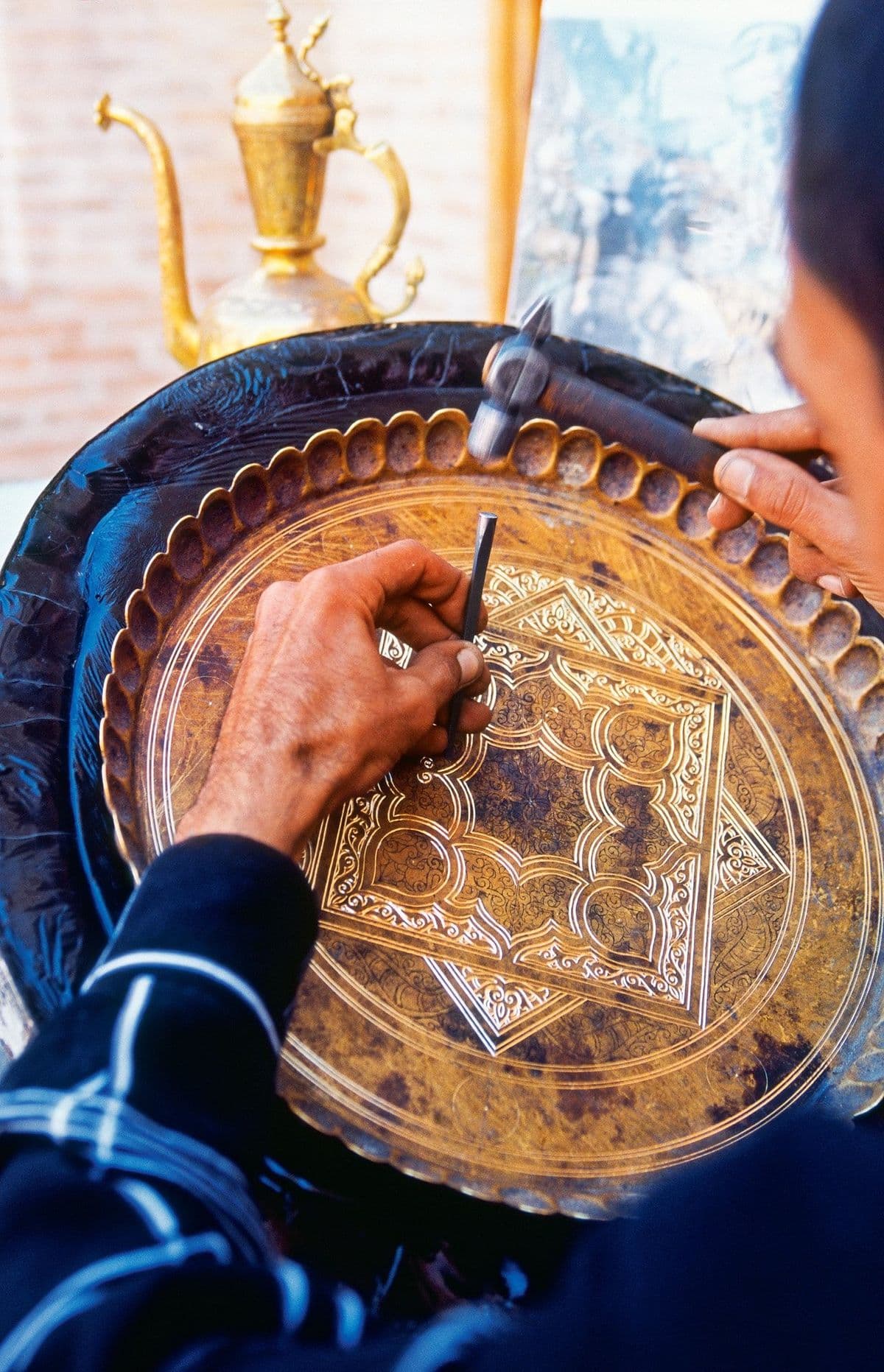
Al-Darb al-Ahmar: where the metalwork in the museum cases still gets made
Two kilometers from the Egyptian Museum in Tahrir (and a short taxi from GEM), the medieval district of Al-Darb al-Ahmar sits along the old city walls near Bab Zuweila. It's still a working craft neighborhood — tentmakers, coppersmiths, woodworkers with lathes older than their grandfathers.
The workshops here run in families. A smith working today may well be the third generation at the same bench — a grandfather hammering pieces for Cairo households in the 1950s, a grandson now hand-etching geometric Islamic patterns into trays and coffee pots with the same dozen hand tools and no machinery. Ask, and more than a few will hand you a hammer and let you dent your first crooked line into a small dish you keep. It's loud, it's hot, and it's the closest thing to time travel Cairo offers that doesn't require a ticket.
The workshops themselves are barely wider than a hallway, tools hung on nails that have clearly held the same tools for decades, and the smith narrates as he works — which pattern comes from which century, which mosque nearby uses the same motif on its minbar, why copper was the metal Cairo's kitchens trusted before anyone had heard of stainless steel. Visitors often expect to watch. Most end up staying two hours, hands black with polish, because once you're holding the hammer it's hard to hand it back. You can book time with Cairo's craft hosts on Rafiky.
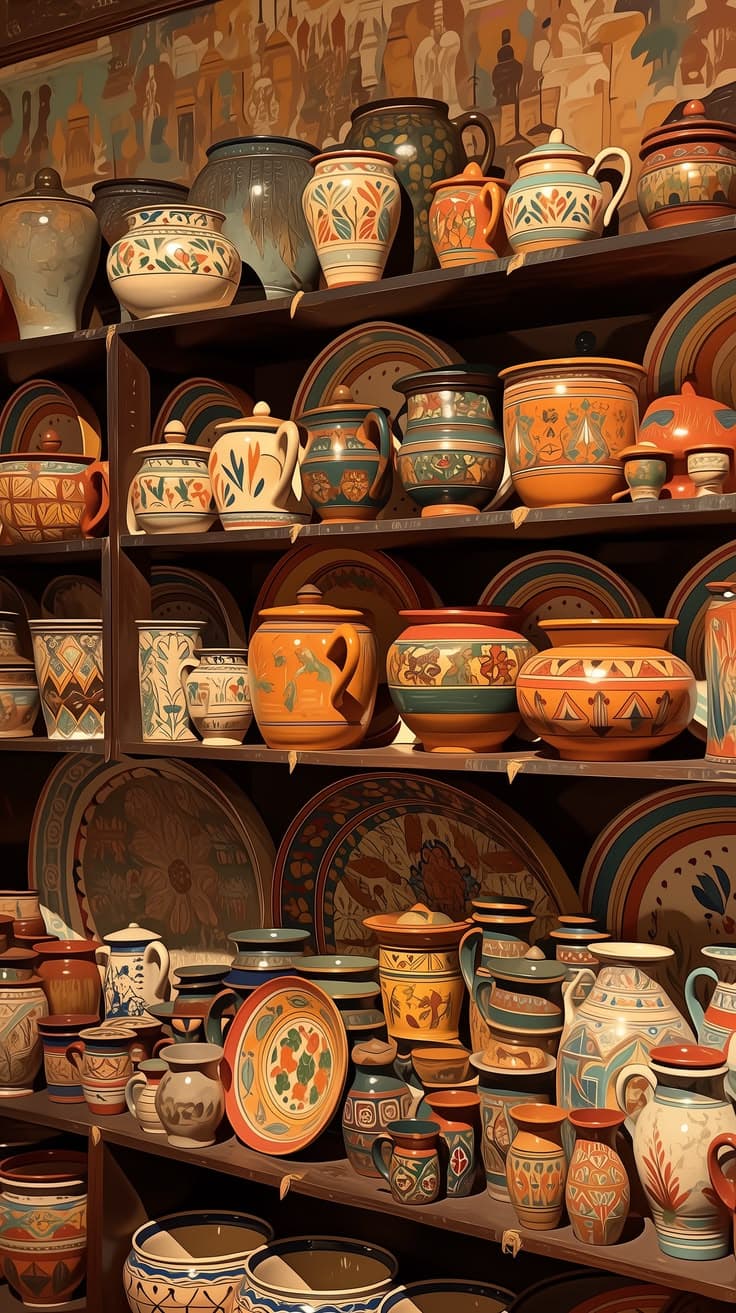
Fustat: Egypt's first Islamic capital, now a pottery quarter
South of Old Cairo, Fustat was Egypt's first capital after the Arab conquest in 641 CE — centuries before Cairo as we know it existed. Today its potters' quarter produces the terracotta and glazed ceramics sold across the country. Watching a wheel-thrown bowl take shape in fifteen minutes, in the neighborhood where pottery has been thrown for over a thousand years, reframes what "ancient Egypt" even means — it's not only pharaonic, it's continuous.
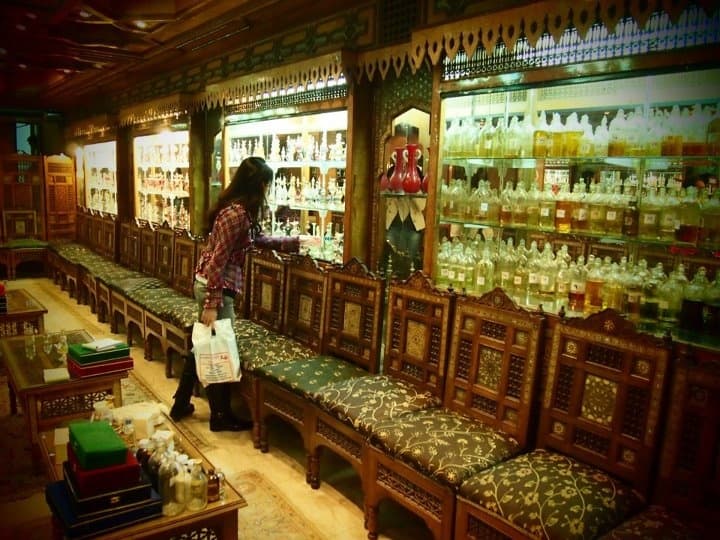
Sayeda Zeinab: perfume, incense, and the original Egyptian scent trade
Named for the mosque at its heart, Sayeda Zeinab is where Cairo's perfume trade concentrated for generations. Small, family-run attar shops blend oils the way Ancient Egyptian embalmers and priests once did, using lotus, amber, and musk bases passed down as closely guarded recipes. A blending session with a third-generation perfumer costs less than a museum audio guide and produces a scent you can't buy anywhere else — because it was made for you, in front of you.
The Nile, slowly
If Cairo's alleys are one antidote to the checklist trip, the Nile itself is another. A growing number of travelers are trading the standard cruise ship for dahabiyas — traditional wind-powered sailboats that move at the river's pace, not a schedule's. Routes between Luxor and Aswan now stop at places large cruise ships can't reach, including the Gebel El Silsila quarry temples and the quiet oases of Dakhla and Kharga further west — genuinely under-visited even by Egypt standards, and extraordinary for it.
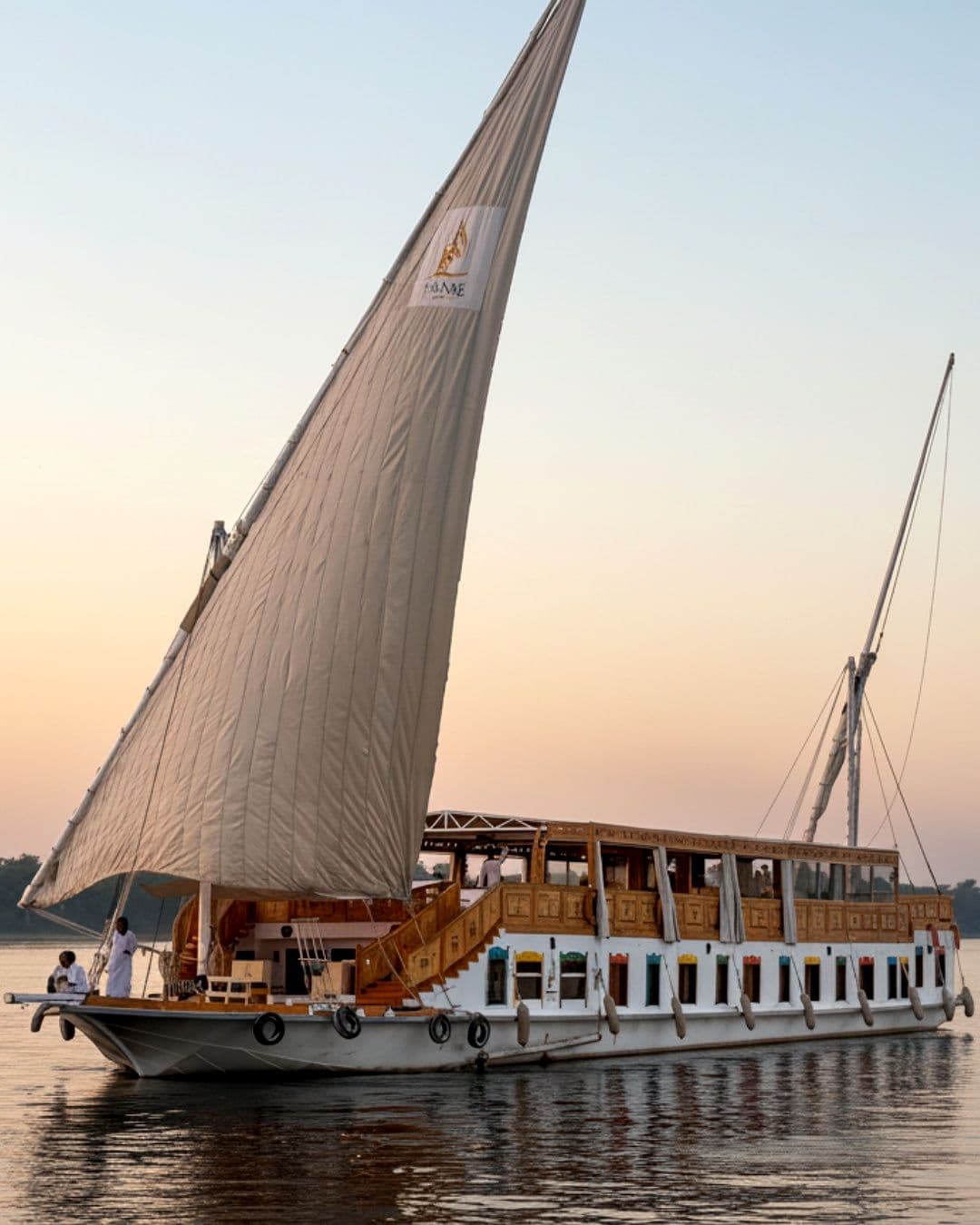
A single night aboard a dahabiya changes the rhythm of a whole trip. There's no buffet line, no PA system, no schedule beyond the wind and the current — just a small crew, a handful of other travelers, and hours of riverbank scenery that hasn't changed much since the temples along it were built. Meals happen on deck. Conversations run long. It's the version of "seeing the Nile" that Ancient Egyptians themselves would recognize, and it's noticeably cheaper than the five-star cruise ships marketed at the same travelers, because it's smaller and slower by design, not by budget.
Why this matters more in 2026
Two things are true about travelers right now, especially Gen Z and millennial ones: they're more budget-conscious than the luxury-travel headlines suggest, and they're less willing to spend that budget on anything that feels canned. Social feeds are full of GEM's pyramids-at-sunrise shot — which is exactly why the next thing worth sharing is the version nobody else has: a name, a workshop, a skill passed down four generations, learned first-hand.
This is also where sustainability and authenticity quietly overlap. Booking directly with a family workshop or a small dahabiya operator keeps tourism revenue inside the neighborhoods and river communities actually hosting you, rather than routing it through layers of intermediaries. It's a better trip and a better trade.
This is the exact model Rafiky runs on. Instead of booking a generic "Old Cairo walking tour," you book time with a coppersmith in Al-Darb al-Ahmar, or a Fustat potter, or a Sayeda Zeinab perfumer — vetted local hosts sharing their own craft, on their own terms. Browse verified experiences on Rafiky and message hosts directly before you land, so your first afternoon in Cairo isn't spent figuring out where to go — it's already booked with someone waiting to show you.
Planning it: a simple two-day Cairo framework
- Day one — the icon. Grand Egyptian Museum in the morning, before 9am if you can manage it, when the galleries are still walkable. Give it four hours minimum; it deserves them.
- Day two — the city. Start in Al-Darb al-Ahmar with a coppersmith's workshop, walk to Bab Zuweila, cross into Fustat for the pottery quarter by early afternoon, and end in Sayeda Zeinab for a perfume blending session as the evening call to prayer starts. Three neighborhoods, three crafts, zero tour bus.
If you have a third day, add the river — even a single-night dahabiya stretch near Luxor or Aswan reframes the whole trip. You'll leave Egypt having seen what the pharaohs built and met the people still building on top of it. Book the connective tissue between those two days on Rafiky.
Frequently asked questions
Is it worth visiting Cairo neighborhoods like Al-Darb al-Ahmar as a solo traveler?
Yes. These are residential, working districts, not remote or unsafe areas — they're a short taxi from downtown Cairo and well within areas frequented by both locals and visitors during daylight hours. Going with a local host, rather than wandering in cold, makes the visit far richer: you get context, introductions, and a reason to be there beyond looking around.
How much time should I budget for the Grand Egyptian Museum versus Old Cairo's craft neighborhoods?
Plan a full morning or afternoon (4+ hours) for GEM alone given its size, and a separate half-day for Old Cairo's neighborhoods. Trying to combine both in one day usually means rushing one or the other — better to split them across two days if your itinerary allows.
Are these craft experiences (coppersmithing, pottery, perfume-blending) suitable for families or non-experienced travelers?
Yes. These hosts work with complete beginners regularly, including children old enough to handle a small hammer safely. No craft background is needed — the point is learning alongside someone who's done it their whole life, not producing a perfect object.
What's the best way to book time with local hosts in Cairo rather than a standard group tour?
Platforms like Rafiky connect travelers directly with vetted local experience providers — you can browse host profiles, read what past travelers experienced, and message before booking, on Rafiky.
Is July too hot to explore Old Cairo's neighborhoods on foot?
Cairo runs hot in July, with daytime highs around 35°C (95°F), so mornings and early evenings are best for walking between Al-Darb al-Ahmar, Fustat, and Sayeda Zeinab. Workshop visits themselves are a welcome break from the heat — most are indoors, shaded, and unhurried, which is part of why they pair so naturally with a midday itinerary built around GEM's air-conditioned galleries.